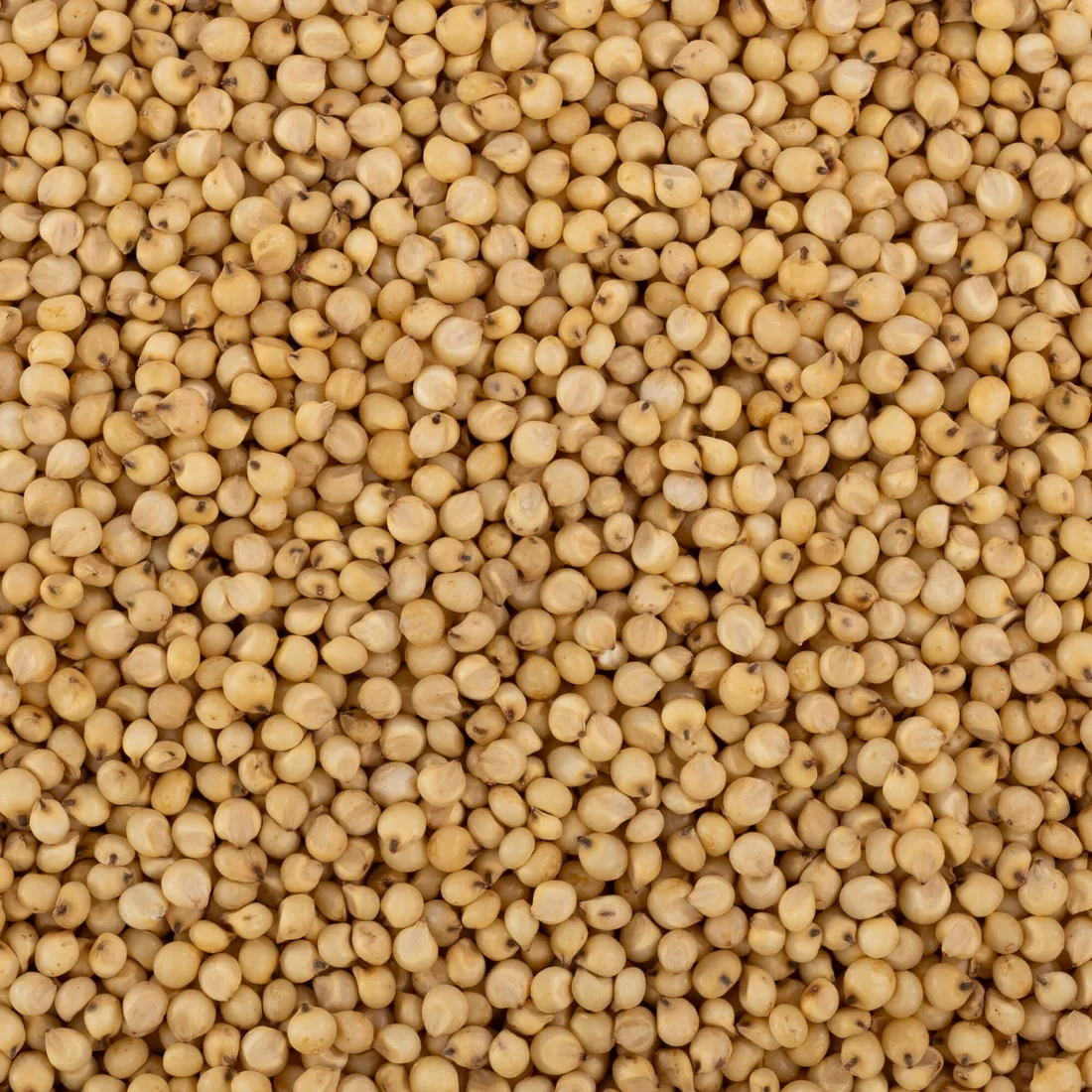
This grain is valued for its hardiness, particularly its ability to withstand drought and heat, making it a staple crop in arid and semi-arid areas. Sorghum is used in numerous ways: as a food source for humans, animal feed, and even in the production of biofuels. It’s naturally gluten-free, making it a suitable option for those with gluten sensitivities. Sorghum, often referred to as sorghum millet, is a versatile cereal grain belonging to the grass family. It’s scientifically known as Sorghum bicolor and goes by various names like jowar, great millet, or guinea corn. Originating in Africa, sorghum is now widely cultivated in tropical and subtropical regions worldwide.
Types of Sorghum millet
Sorghum millet is utilized in food products in a wide range of ways. It can be added to baked items and even popped like popcorn in addition to being eaten as food.
Whole grains: Since they are chewy and unprocessed, you can cook them similar to rice or quinoa. It offers an adequate basis for many different kinds of foods, from salad to pilaf.
Pearled grain: Although pearled sorghum does not have the bran layer, it’s a little softer texture than whole grain. This is the most common choice for people who need to put in less time and who prefer a milder flavor.
Quality & Sourcing
Sourced from trusted agricultural
regions with attention to grading,
cleanliness, and overall quality
consistency.
Packaging & Bulk Supply
Available in standard bulk packaging
such as 25kg and 50kg bags, suitable
for transport and export handling.
Trade & Availability
Suitable for both domestic distribution
and international trade, depending on
sourcing and logistics arrangements.